Mountains of Cardboard: Why Online Shopping Needs Its Next Big Innovation
August 6, 2026 · The Nadabox Team · 4 min read
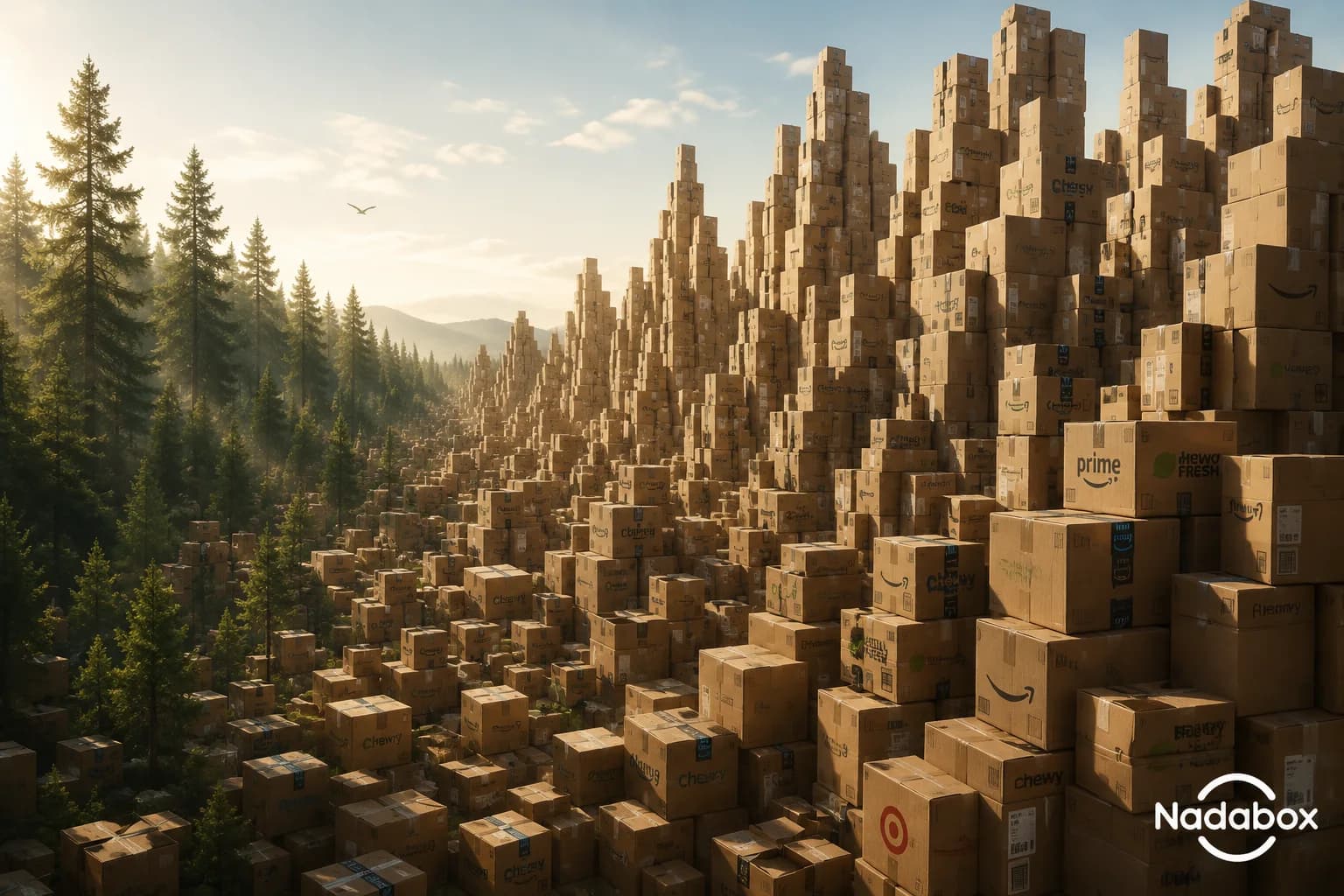
Every month, households across America generate mountains of cardboard from online shopping alone.
It doesn’t happen all at once. It arrives one Amazon box, one Chewy delivery, one HelloFresh meal kit, one Target order, and one everyday essential at a time—until your garage, recycling bin, or entryway is quietly taken over by cardboard.
We’ve completely reinvented how products get to our homes. But when it comes to everything that happens afterward, we’re still breaking down boxes by hand, making recycling runs, and waiting in return lines.
It doesn’t have to be that way.
The Golden Age of Delivery
Online shopping has changed the way we live.
Need dog food? Chewy has it.
Forgot dinner? HelloFresh delivers.
Need diapers, paper towels, or a birthday gift? Amazon can have it on your doorstep before tomorrow.
The convenience is incredible. Millions of families now rely on doorstep delivery as part of everyday life, and every year, more of what we buy arrives in a cardboard box.
The front half of shopping has never been easier.
The back half has barely changed.
Nobody Thinks About What Happens After the Box Arrives
Every package leaves behind something.
A cardboard box.
Plastic air pillows.
Packing paper.
Tape.
Shipping labels.
Sometimes an item that needs to be returned.
Individually, none of it seems like a big deal.
Collectively, it becomes another chore.
Another pile in the garage.
Another overflowing recycling bin.
Another Saturday spent driving to UPS or FedEx instead of doing something you’d actually enjoy.
We’re Trying to Live Lighter
More families today care about reducing waste and living with a lighter footprint.
We recycle.
We choose reusable products.
We drive electric vehicles.
We look for brands that are better for the environment.
But here’s the problem:
Doing the right thing still takes time.
Cardboard doesn’t magically disappear because it’s recyclable. Someone still has to flatten every box, carry it outside, organize the recycling, and deal with the overflow when the bin is already full.
Being environmentally conscious shouldn’t create more work.
It should remove it.
The Missing Piece Is Reverse Logistics
For decades, companies have obsessed over getting products to your home faster.
But almost nobody has focused on what happens after delivery.
That’s where doorstep reverse logistics comes in.
Instead of making homeowners manage the cleanup, imagine if the cleanup simply became part of the delivery ecosystem.
Open your packages.
Enjoy what you ordered.
Set your cardboard out.
Leave your eligible online shopping returns with it.
Everything else is handled for you.
No flattening boxes.
No recycling runs.
No return lines.
No unnecessary trips across town.
More Time. Less Clutter. A Smaller Footprint.
Imagine never hearing,
“Can you break down all those Amazon boxes?”
Imagine your garage staying clean because cardboard leaves every week instead of piling up for months.
Imagine returning an online purchase without planning your weekend around a trip to UPS or FedEx.
That’s not just convenience.
That’s giving families their time back.
And when recycling is easier, more cardboard actually gets recycled instead of sitting in garages, overflowing bins, or ending up somewhere it shouldn’t.
Sometimes the most meaningful environmental improvements aren’t about asking people to do more.
They’re about making the right thing the easiest thing.
The Future of Shopping Doesn’t End at Delivery
Amazon transformed delivery.
The next chapter isn’t getting packages to your house five minutes faster.
It’s making everything that happens after shopping just as effortless.
Because the online shopping experience shouldn’t end when the package arrives.
It should end when the box is responsibly out of your home, your return is already on its way back, and your Saturday is still yours.
That’s the future of doorstep reverse logistics.
And we think it’s long overdue.
Frequently Asked Questions
Why do online shoppers accumulate so much cardboard?
Because more everyday purchases now arrive by delivery. Amazon, Chewy, HelloFresh, Target, Walmart, clothing retailers, electronics, and subscription boxes all contribute to a steady stream of cardboard entering the home.
What is doorstep reverse logistics?
Doorstep reverse logistics is the process of collecting cardboard and eligible online shopping returns directly from your home, eliminating trips to recycling centers, UPS, FedEx, or other return locations.
Why is cardboard recycling still inconvenient?
Even though cardboard is recyclable, homeowners still have to break it down, store it, fit it into recycling bins, and move it to the curb. For busy families, that’s often the most frustrating part of online shopping.
How does Nadabox help?
Nadabox makes life after shopping effortless. Members simply set out their empty cardboard boxes and eligible online shopping returns on pickup day. We handle the pickup, so you spend less time breaking down boxes, less time waiting in return lines, and more time enjoying what matters most.
Life After Shopping™ Starts Here.
Online shopping changed the way we buy.
It’s time we changed everything that comes after.
Ready to hand it off?
Join the club