
Returning Stuff Without the Box or the Line? Green Flag.
August 11, 2026 · The Nadabox Team · 7 min read
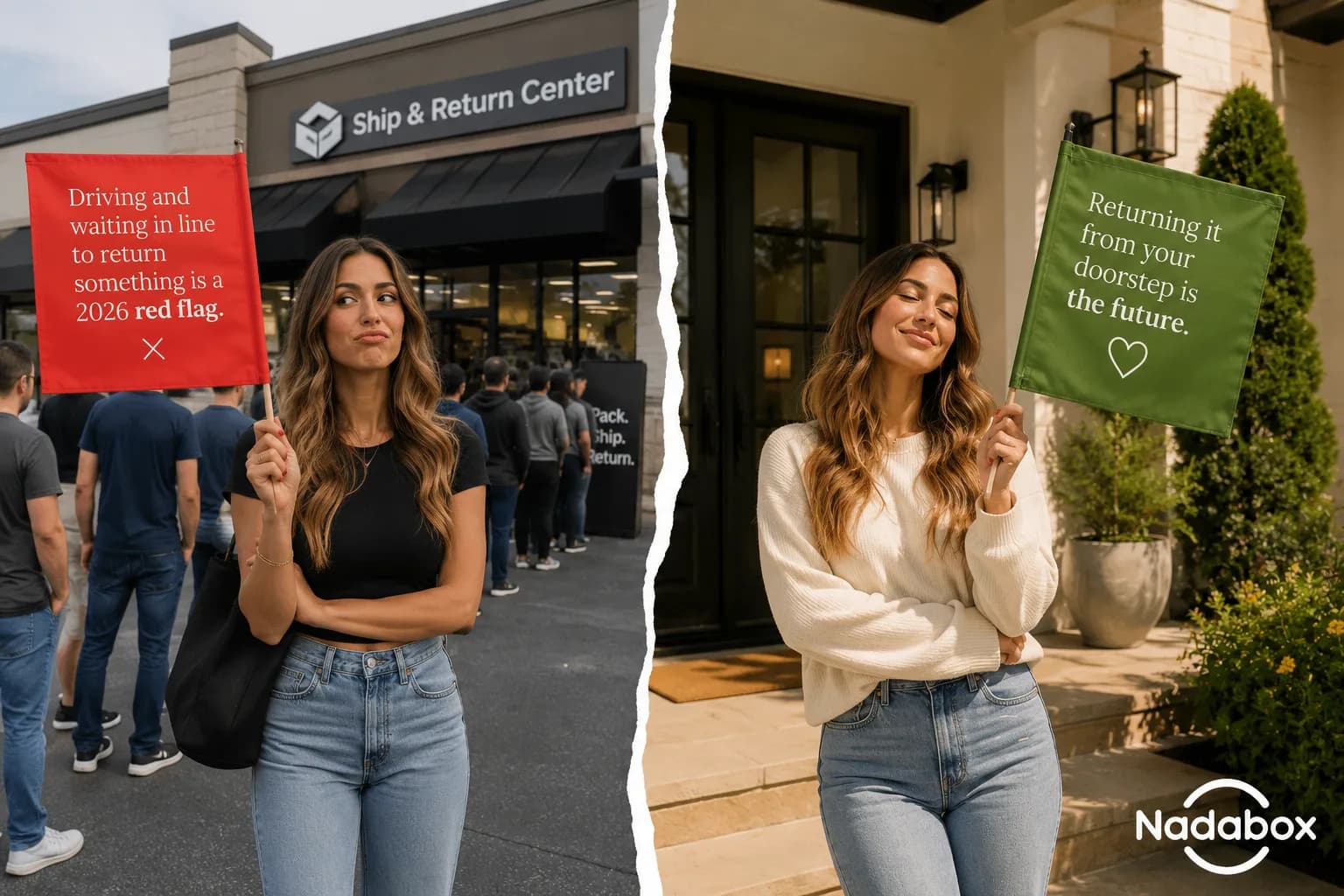
There is a package by your front door right now. You know the one. It's been there long enough that you've stopped seeing it. It's furniture at this point. A little tote bag full of the wrong-size sweater, waiting for the day you finally muster the energy to find the box, find the tape, find the printer, find the parking spot at the drop-off location that's always somehow 15 minutes out of your way.
That day never comes. The return window closes. You just... own the sweater now.
We've all been there, and it's genuinely one of the dumbest chores of modern life. So let's talk about how to return Amazon without the box or label, why it's easier than you think, and why the whole ritual is something we're officially over.
The return that quietly becomes a purchase
Here's the plot twist nobody warns you about: online returns are free to start and expensive to finish.
Starting a return takes 90 seconds. You tap a few buttons, pick a reason, feel productive. Then reality hits. You need the original box, or a box. You need tape. You might need to print a label, which means finding a printer, which in 2026 is its own small odyssey. Then you need to drive somewhere, wait in a line, and hand the whole thing over.
Every one of those steps is a place where the return dies. The box sits by the door. The window closes. The "free return" turns into a full-price item you didn't want, in a color you don't like.
Retailers know this, by the way. Friction is a feature. The harder it is to send something back, the more likely you are to keep it. The pile by your door isn't laziness. It's design.
Yes, you can return Amazon without the box or label
Good news first: for a huge chunk of orders, you do not need the original box, and you do not need to print anything.
Here's the short version of how to return Amazon without the box or label:
- Start the return in the app. Go to Your Orders, pick the item, hit Return or Replace Items, choose your reason.
- Look for the "no box, no label" option. When you pick your drop-off method, Amazon often offers a location where you just show up with the item and a QR code. No packaging required.
- Screenshot or save the QR code. The staff scans it, boxes the item for you, and you leave. That's it. No tape, no printer, no cardboard hunt.
The QR-code return is genuinely one of the better things Amazon has rolled out. You walk in holding a loose sweater like a normal person, someone scans your phone, and you walk out. The whole box-and-label circus disappears.
The catch? You still have to physically go somewhere. Which brings us to the part that's still annoying.
The QR code is great. The trip is not.
Let's be honest about what "box-free return" actually solves. It solves the packaging problem. It does not solve the getting-off-your-couch problem.
You still have to:
- Remember the return exists before the window closes
- Find the item you already shoved in a closet
- Drive to the drop-off spot during its open hours
- Park, walk in, wait behind the person with 11 packages and a complicated situation
- Do all of this within a specific number of days you will absolutely forget
So the QR code turned a five-step chore into a three-step chore. Progress. But a return you have to leave the house for is still a return that's going to sit by your door for two weeks. The bottleneck was never really the tape. It was you, a busy human, being asked to run an errand for a company's benefit.
A green flag return is one you never have to think about again after you decide you don't want the thing. We're not fully there yet with the standard process. But you can get close.
How to make returns almost painless
Until the whole system is fixed, here's how to stop letting returns rot by your door.
Start the return the same day the box arrives. The single biggest predictor of whether a return actually happens is how fast you start it. Try the thing on, decide, and if it's a no, open the app before you even fold the sweater. Momentum is everything.
Always choose the no-box, no-label option when it's offered. Even if a UPS Store is slightly farther, skipping the packaging step saves you the entire cardboard-and-tape spiral. Loose item plus QR code beats a boxed item plus label every time.
Keep a returns landing zone, not a returns graveyard. One designated spot by the door for stuff going back, with the QR code saved to your phone the moment you start the return. The difference between a landing zone and a graveyard is a deadline you actually track.
Set a phone reminder for two days before the window closes. The return window is the villain here. Most items give you 30 days, which somehow feels like forever and then it's suddenly day 31. A calendar nudge saves the whole thing.
Batch your errands. If you must drive it somewhere, pin the return to a trip you're already taking. Never make a dedicated round-trip to return a nineteen-dollar item. The gas costs more than the sweater.
The cardboard situation is its own green flag conversation
Even when you nail the return, there's a second problem quietly building in your garage: the boxes.
Online shopping is a cardboard faucet you can't turn off. The stuff you keep still comes in a box. The stuff you return sometimes came in a box you didn't use. Multiply that across a household ordering a few times a week and you've got a corner of the garage that's basically a cardboard reef by the end of the month.
Breaking them down is a whole thing. Fishing out the packing tape, flattening, cutting them so they fit the bin, discovering the bin is already full, stacking the overflow "for next week." Next week the pile is taller.
And here's the part that stings if you care about sustainability: cardboard is one of the most recyclable materials on the planet, but only if it's clean, dry, and flattened. A soggy box that sat in the garage through a rainstorm often can't be recycled at all. So the pile isn't just ugly. It's actively undoing the good the material is capable of.
A green flag home isn't one that never orders online. That ship has sailed for all of us. A green flag home is one where the boxes leave as reliably as they arrive.
The bar should be higher than this
Zoom out for a second. We've built a world where you can want something, tap a screen, and have it appear at your door in a day. That's genuinely magic.
And then the magic just... stops. The convenience ends the moment the box hits your porch. After that, the labor is all yours: the breaking down, the hauling, the tape hunt, the drop-off line, the return that never happens. Shopping got a hundred times easier. Un-shopping stayed stuck in the Stone Age.
That gap is the whole reason we exist. The convenience of buying should last all the way until the box is gone, not end when the box shows up. That's the entire idea behind Doorstep Unshipping™: the returns get handled without the label-tape-drop-off runaround, and the box pile in the garage gets broken down and hauled away every week. You put the returns and the cardboard by your door, and they simply leave.
No QR-code scavenger hunt. No line. No box graveyard. No sweater you accidentally own now.
So yes: returning stuff without the box or the line is a green flag. Never touching the box or the line in the first place? That's the real one.
Start your returns fast, save your QR codes, guard your return windows, and give your recycling bin a fighting chance. And when you're finally ready to stop letting the pile win, that's exactly the part we'll take off your hands, one doorstep at a time.
Ready to hand it off?
Join the club