
Where Does Your Bubble Wrap Actually Go? (Plot Twist)
August 25, 2026 · The Nadabox Team · 7 min read
There's a specific kind of denial that happens when you pop a fresh package. The bubble wrap comes out, you squeeze exactly one bubble because it's a legal requirement of being human, and then you look at the pile of crinkly plastic and think: I'll deal with that later.
Later arrives. The plastic is now a nest in the corner of your kitchen. You ball it up, march it to the recycling bin, and feel great about yourself.
Plot twist: that bin is almost certainly the wrong place. Figuring out where to recycle bubble wrap and plastic film is one of those chores that sounds simple and turns out to be a small, annoying research project. Let's fix that.
Why your curbside bin says no
Here's the thing nobody tells you at checkout: bubble wrap, air pillows, poly mailers, and the clear film wrapped around basically everything are all made from flexible plastic. And flexible plastic is the archnemesis of curbside recycling.
Curbside systems run on machines that sort by shape and rigidity. Cans roll, cardboard flattens, bottles tumble — all very cooperative. Bubble wrap and plastic film? They're gremlins. They wrap around the spinning parts of the sorting equipment, jam the gears, and force workers to climb in and cut them out by hand.
So when a stray piece of film shows up, it doesn't get recycled. In a lot of facilities it actively causes damage and downtime. Which is why most municipal programs flat-out ban it from the blue bin, even though it feels like it should belong there.
The cruel irony: tossing it in the recycling can be worse than tossing it in the trash, because it can contaminate an entire load of otherwise-recyclable stuff.
What actually counts as "plastic film"
Before you can recycle it, you have to identify it, and "plastic film" is a bigger category than most people realize. If it's stretchy, crinkly, and you can poke your finger through it, it's probably film.
The usual suspects from your delivery haul:
- Bubble wrap (obviously) — pop it flat first, nobody's judging
- Air pillows — the inflated plastic cushions padding your order
- Poly mailers — those soft plastic envelopes clothing ships in
- Plastic overwrap — the film around water bottle cases, paper towels, toilet paper
- Bread bags, produce bags, ziplocks (clean and dry)
- Grocery and retail shopping bags
- Case wrap and pallet stretch film if you're fancy
The common rule of thumb: if it stretches when you pull it, it's likely store-drop-off material. If it's crinkly and rigid enough to hold a crease sharply, do a quick check. And anything with a lot of tape, labels, or food residue needs to be cleaned or trimmed first.
A few things that look like film but aren't accepted: the crinkly "metallic" chip-bag type material, anything mixed with paper (those padded mailers with a bubble lining and a paper shell), and compostable or biodegradable plastics. Those go their own separate ways.
Where to recycle bubble wrap and plastic film (for real)
Here's the good news: there is a real system for this. It just doesn't live at your curb.
Store drop-off bins are the answer for most people. Tons of grocery stores, big-box retailers, and pharmacies have a bin near the entrance — usually right by the carts or the automatic doors — specifically for plastic bags and film. That bin feeds a separate recycling stream designed for stretchy plastics, which get turned into things like composite lumber and new bags.
How to find one without driving around aimlessly:
- Check the front of your usual grocery or big-box store — the bin is often hiding in plain sight
- Search a store-drop-off locator online by typing your zip code (there are national databases for exactly this)
- Ask customer service; employees usually know where the bin is even if it's tucked away
A couple of ground rules so your good deed actually sticks:
- Everything must be clean and dry — no crumbs, no grease, no mystery moisture
- Remove labels and tape where you can, especially shipping labels
- Pop your bubble wrap and deflate air pillows so they're flat and take up less space
- Bunch it all into one bag so it doesn't blow across the parking lot
Done right, that pile of packaging genuinely gets a second life. Done wrong — tossed in curbside, left wet, full of tape — it goes straight to a landfill with extra steps.
The catch nobody mentions
So store drop-off works. Great. Here's the part that makes people quietly give up: the logistics.
Recycling bubble wrap and plastic film the right way requires you to:
- Collect the film somewhere in your home (a bag, a bin, a growing shameful corner)
- Keep it clean and dry the entire time
- Peel off tape and labels
- Remember to bring it with you
- Actually locate the bin
- Not just leave it in your car for three weeks
That's six steps between you and a clear conscience. And every single one is a place where the plan falls apart.
Be honest about which one gets you. For most of us it's step four or six — the bag lives by the front door for so long it becomes furniture. Or the pile grows faster than your trips to the store, so you're always behind. The whole thing has a way of expanding to fill whatever willpower you throw at it.
This is the dirty secret of well-intentioned recycling: the barrier is rarely knowledge. It's friction. You know where the bin is. You just haven't gone. Nine days and counting.
Cut down the film before it piles up
While we're here, the best plastic film is the film you never had to deal with. A few habits that shrink the pile:
- Consolidate orders. Five separate deliveries mean five separate mounds of air pillows. One combined shipment means one.
- Choose lower-packaging options at checkout when a retailer offers them. Some let you opt for minimal or plastic-free packaging.
- Reuse before you recycle. Bubble wrap and air pillows are genuinely great for storing fragile stuff, shipping your own packages, or padding a move. Save a stash, recycle the overflow.
- Bring your own bags so retail film doesn't join the pile in the first place.
None of this makes the film disappear entirely — online shopping is a plastic-generating machine and one person can only do so much. But it turns a weekly avalanche into a manageable trickle, which makes the whole "actually taking it to the bin" part far less daunting.
The part where you stop thinking about it
Let's zoom out. You did the research. You know bubble wrap can't go curbside, you know store drop-off is the move, you know it needs to be clean and dry and label-free. You are now, officially, a more informed person than 90 percent of the people at the grocery store.
And yet the pile still exists. Because knowing where plastic film goes and having the time and energy to get it there are two completely different problems. One is a Google search. The other is a recurring drain on your Saturday.
This is exactly the gap we started Nadabox to close. Because here's our whole philosophy: the convenience of online shopping should last until the packaging is gone — not end the second the box hits your porch. Right now that convenience quietly hands you a second job as an unpaid recycling coordinator. That's the opposite of convenient.
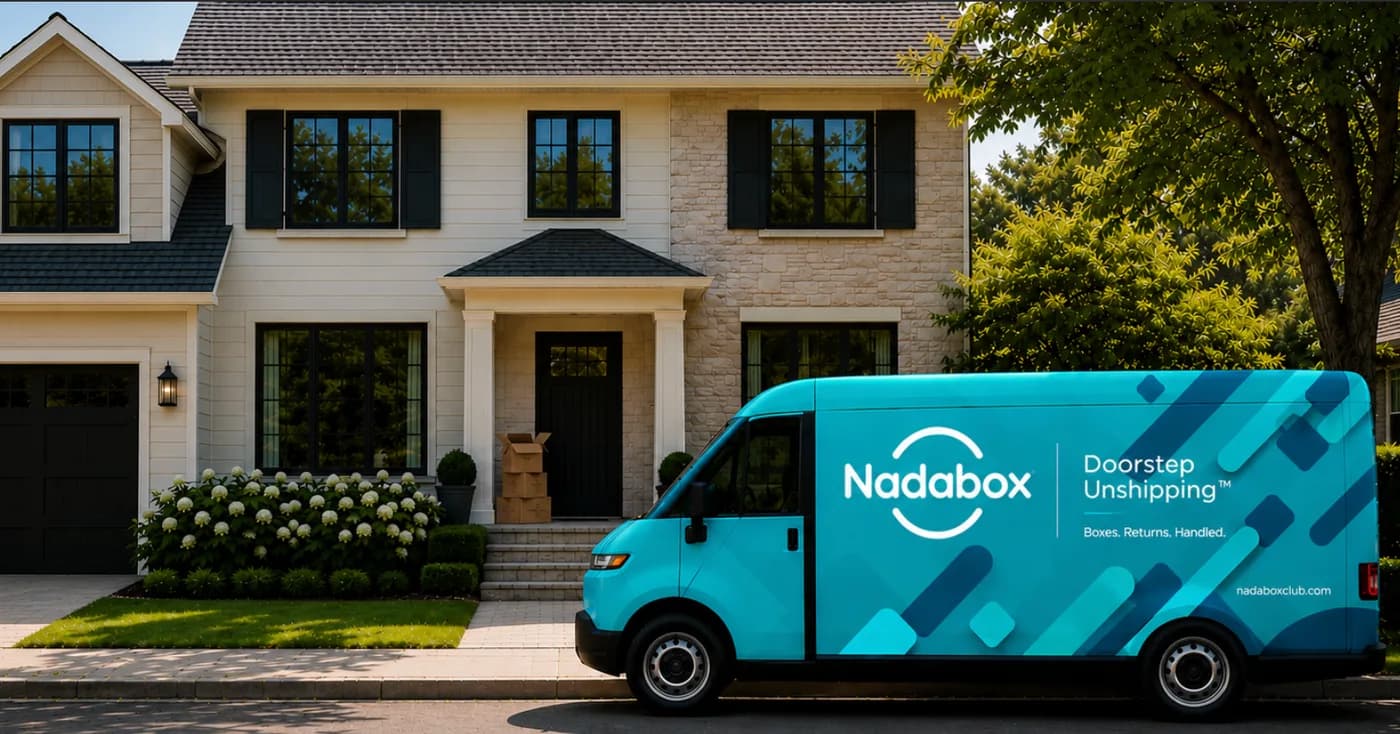
So we come to you. Weekly. We break down and haul away the cardboard mountain, and we take the crinkly stuff too — bubble wrap, air pillows, poly mailers, all of it — so it ends up where it's actually supposed to go instead of your garage or a landfill. No bin-hunting, no keeping it dry for three weeks, no bag by the door slowly becoming a permanent fixture.
That's the whole idea behind Doorstep Unshipping™: shopping's convenience shouldn't quit on you the moment the delivery driver walks away. You already did the hard part by caring. Let someone else do the driving.
Pop the bubbles. That part's yours forever. The rest? We've got it.
Ready to hand it off?
Join the club